Field maple
Acer campestre

- 1of 3, difficulty
- 6styles it carries
- Outdoorall year
- NovemberRemove any wire that is biting.
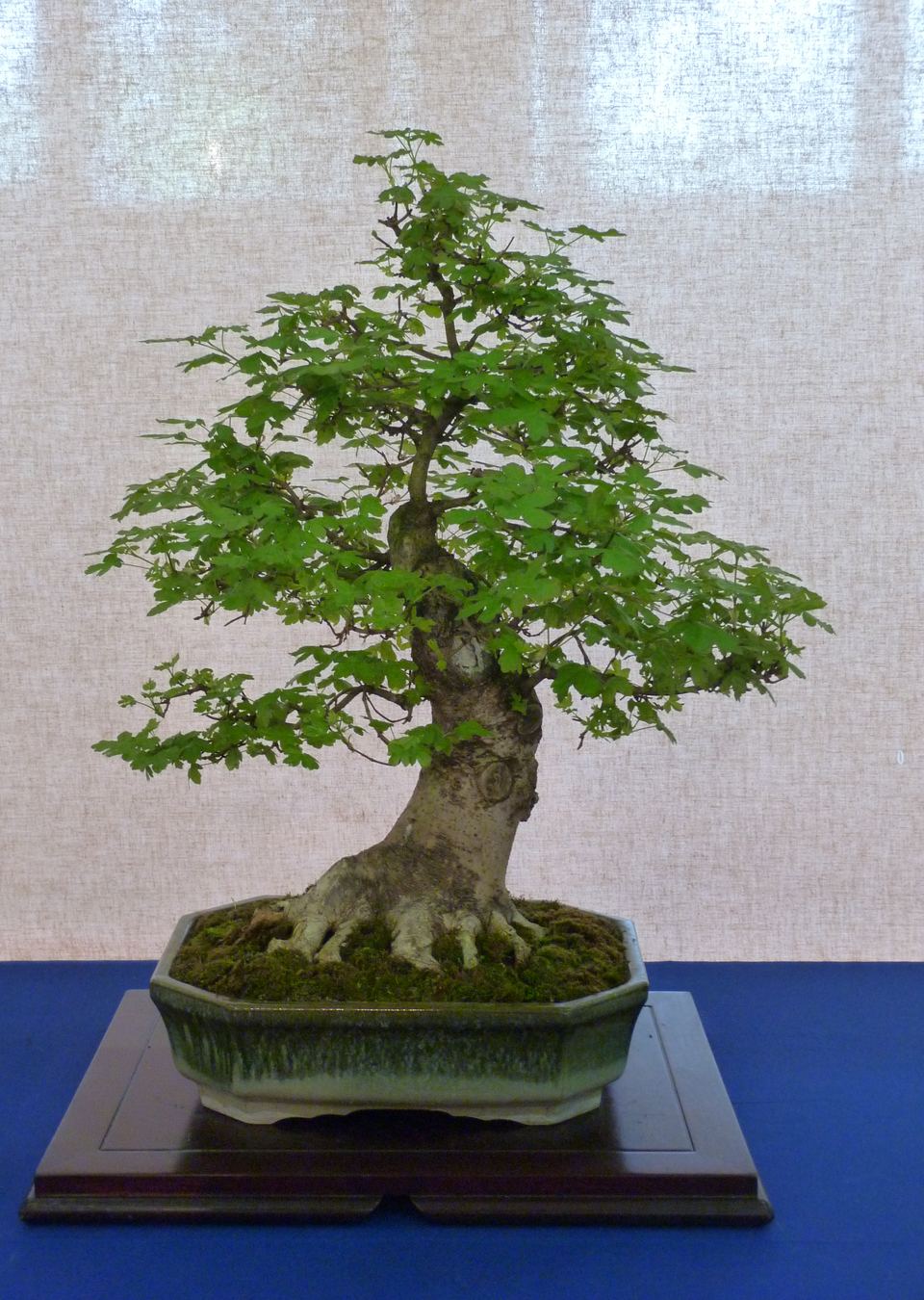
A European hedgerow maple: tough, small-leaved, happy in a hedge or a pot, and often the cheapest good deciduous bonsai material where it grows.
- Lives
- Outdoor
- Hardiness
- RHS H6: a native tree, hardy in the ground; a shallow pot still wants shelter from a hard frost, because frozen roots cannot replace what a drying wind takes from the twigs USDA 6b/7a, the RHS's own equivalent.
- Leaves
- small leaves
- Styles
- informal upright, broom, slanting, forest group, windswept, root over rock
- Soil
- 2 parts akadama, 1 part pumice, 1 part lava (by volume); it also does well in a cheaper mix of 1 part akadama to 1 part horticultural grit for a tree in training
The year
Timings for a temperate northern climate.
- Repot
- Wire
- Prune
- Pinch
- Protect
- Feed
- Water
- Watch for pests
- J
- F
- M
- A
- M
- J
- J
- A
- S
- O
- N
- D
- JanuaryDormant and content outside.
- FebruaryStructural work on a bare tree: the trunk chop on a collected stump, removal of a heavy branch, shortening a long leader.
- MarchRepot as the buds swell, every two years for a young tree and every three or four for an old one.
- AprilLeaves open.
- MayGrowth is fast and the pot dries daily; water every day and twice in a warm spell.
- JuneCut the spring extension back to one or two pairs of leaves on shoots you want to ramify; a strong, established tree can be partly or fully defoliated in early June for a smaller second set of leaves.
- JulyWater is the job.
- AugustAs July, with any second flush pinched as it comes.
- SeptemberGrowth stops.
- OctoberYellow autumn colour in the second half of the month.
- NovemberDormant.
- DecemberLeave it cold, damp and sheltered.
The whole year
- Akadama (hard, medium grade) Check price on Amazon Search eBay
- Pumice (3 to 6 mm) Check price on Amazon Search eBay
- Lava rock (kiryu or black lava, 3 to 6 mm) Check price on Amazon Search eBay
- Drainage mesh and tie-in wire Check price on Amazon Search eBay
- Root hook and rake Check price on Amazon Search eBay
- Bamboo chopsticks (plain) Check price on Amazon Search eBay
- Anodised aluminium wire, 1 to 4 mm Check price on Amazon Search eBay
- Bonsai wire cutter Check price on Amazon Search eBay
- Bonsai shears (long-handled, stainless) Check price on Amazon Search eBay
- Concave branch cutter Check price on Amazon Search eBay
- Cut paste (wound sealant) Check price on Amazon Search eBay
- Slow-release organic fertiliser pellets Check price on Amazon Search eBay
- Frost fleece (frost cloth) Check price on Amazon Search eBay
- Cold frame Check price on Amazon Search eBay
- Pot wrap Check price on Amazon Search eBay
Rules of thumb; your garden varies. The full calendar, with print, PDF and a calendar file.
The whole profile
Acer campestre is the only maple native to Britain. It grows in hedgerows and on the edges of woods across England and Wales, on chalk, clay and almost anything else, and it has been cut, laid and trimmed by farmers for a thousand years without complaint. That history is the whole case for it as a bonsai tree. It takes pruning the way a hedge takes a flail, it back-buds from old wood, it carries small, five-lobed leaves that reduce well, and it costs almost nothing: bare-root hedging whips are sold by the hundred every winter, and old, gnarled trunks come out of hedges that are being grubbed up.
It suits a temperate garden better than many imported species, for the simple reason that it is adapted to changeable weather. It does not scorch in sun, it does not mind wind, it shrugs off a wet winter and a dry summer, and it is very hardy. The leaves are a soft matt green, smaller than a Japanese maple's and rounder in outline, and in autumn they turn a clear butter-yellow, sometimes with orange, that is one of the quiet pleasures of an English October. The bark on an old trunk is corky and fissured, and the twigs of a mature tree often carry corky wings, which give a bonsai a convincing age.
Beginners go wrong with it mostly by expecting too little. Because it is cheap and tough it gets the worst spot on the bench, the leftover soil and the least attention, and it responds by growing coarsely: long internodes, big leaves, a crown of thick shoots. Treated like a Japanese maple, with the same pinching, cutting back and attention to water, it becomes a refined tree. The other mistake is the opposite: being too timid with a collected trunk. A field maple from a hedge can be cut back to a stump and will bud from the bark; the first year's job is to let it grow freely and build root, not to make a bonsai of it.
Through the year it lives outside, in full sun or light shade, in any sheltered spot. In winter it stays out and bare, with the pot on the ground or in a cold frame only in a spell of hard frost with wind. It does not need a greenhouse and is better without one. It is one of the few species where the beginner's instinct to leave it alone over winter is correct.
The growth habit is that of all maples: a spring flush from late March, shoots extending until early summer, a second small flush in a good year. It is apically dominant but less violently so than a trident, and it back-buds on old wood after pruning, which makes it easy to develop a crown of fine twigs from a heavy branch. Pinching the opening shoots, cutting back to one or two pairs of leaves in June, and partial defoliation on a strong tree all work. Cuts heal cleanly and large wounds close in a few seasons.
It wires well: the bark is tougher than a Japanese maple's and marks less, so wire can stay on longer, though it still needs checking monthly in the growing season. Branches set in a season. Collected hedgerow trees often have a trunk with character and no branches worth keeping; those are built from scratch by clip-and-grow and wire over three or four years, which is the best apprenticeship in deciduous bonsai that money cannot buy.
Seasonally it gives a bright green spring, a modest summer, a yellow October and a winter silhouette that, on a well-worked tree, has the density of an old hedge. It will never have the elegance of Acer palmatum and does not need to. A field maple grown from a whip in a tray, or from a stump out of a hedge, is the most honest bonsai a grower can make, and the one most likely to outlive its owner.
Styles that suit it
- Informal upright (moyogi): a hedgerow tree's natural shape: a trunk with movement, a broad crown of fine twigs
- Broom (hokidachi): the fine, dense twigging of a hedge-cut field maple is exactly what a broom needs
- Slanting (shakan): a leaning hedgerow trunk, collected or grown on, reads naturally in a pot
- Forest group (yose-ue): bare-root hedging whips are a few pence each and make a convincing English grove in a tray
- Windswept (fukinagashi): field maples on exposed downland grow leaning away from the wind, and a tree can be shaped to say so
- Root over rock (sekijoju): the roots are less fleshy than a trident's but still grip a stone well over a few seasons
Soil, in detail
2 parts akadama, 1 part pumice, 1 part lava (by volume); it also does well in a cheaper mix of 1 part akadama to 1 part horticultural grit for a tree in training
A native of chalk and clay alike, the field maple is not fussy; what it wants in a pot is drainage through the wet months and enough water-holding to get through a dry June.
Pot
Glazed, as for any deciduous tree, in an oval or a soft rectangle about two thirds the height of the tree in length and about as deep as the base of the trunk. The leaves are small and matt and the tree is rustic, so a muted glaze suits it: a soft green, an oatmeal, a grey-blue or an unglazed-looking matt brown glaze. Bright glazes make it look like a garden-centre plant.
A forest of whips goes in a shallow tray or on a slab. A heavy collected trunk in training belongs in a wooden box or a big plastic pot until the branches are built; a bonsai pot on an unfinished tree slows everything down.
Pests and problems
Aphids on the spring shoots, sometimes heavily, which curl the leaves if they get ahead; squash them early or use a soft-soap spray. Vine weevil grubs in any pot; nematodes in late summer and spring. Gall mites make small red pimples on the leaves of hedgerow trees and sometimes follow a collected tree into the pot; they are harmless and the leaves are removed if they offend.
Powdery mildew, a white dusting on the leaves in a warm, dry late summer, is the one common disease; it is cosmetic, worse on a tree in still air, and goes with the leaves in autumn. Good air movement and a bench rather than a corner prevent it.
Basis of each row
What every month's line rests on: RHS H6: a native tree, hardy in the ground; a shallow pot still wants shelter from a hard frost, because frozen roots cannot replace what a drying wind takes from the twigs.
| Month | What to do | Basis |
|---|---|---|
| January | Dormant and content outside. Shelter the pot from the worst frost and from drying wind by putting it on the ground, against a wall or under a bench; a cold frame is a luxury this species does not need, though it does no harm. Check the soil is damp weekly. Bare-root hedging whips for a forest planting are sold now and can be heeled into a box of soil until March. | rhs RHS: Acer campestre plant page (hardiness H6, native); RHS advice: overwintering container plants |
| February | Structural work on a bare tree: the trunk chop on a collected stump, removal of a heavy branch, shortening a long leader. Seal the cuts. Collected hedgerow trees are lifted this month or next, with as much root as the hedge allows, and potted in a free- draining mix in a deep box. The buds move at the end of the month in a mild year. | reference Harry Harrington, bonsai4me.com species guide (Acer campestre): late-winter pruning and collection; general practice on sealing |
| March | Repot as the buds swell, every two years for a young tree and every three or four for an old one. Comb the roots out and remove up to a third. A forest of whips is assembled now: root-pruned hard, set in a shallow tray with the tallest tree a little forward of centre, tied in, and left to grow. Keep repotted trees out of wind and frost for three weeks. | reference Peter Chan, Bonsai Masterclass (repotting deciduous trees at bud swell; group plantings); general practice |
| April | Leaves open. A late frost can blacken the new growth, and although a field maple recovers, fleece on a clear, still night saves the season. Pinch the opening shoots on a tree in refinement to the first pair of leaves; let a collected tree or a forest in its first year grow freely. Water daily when the surface dries. | practice General bonsai practice for maples in spring; RHS advice: protecting new growth from late frost |
| May | Growth is fast and the pot dries daily; water every day and twice in a warm spell. Begin feeding when the leaves harden: a balanced feed weekly for a tree being developed, fortnightly at half strength for one in refinement. Keep pinching. Squash the aphids on the shoot tips before they curl the leaves. | practice General bonsai practice: feed after the leaves harden; RHS advice on aphids |
| June | Cut the spring extension back to one or two pairs of leaves on shoots you want to ramify; a strong, established tree can be partly or fully defoliated in early June for a smaller second set of leaves. A collected tree in its first year is left alone to build root. Wire young shoots now if you must, checking it every two weeks; the tree is more forgiving of wire than other maples but still thickens fast. | reference Harry Harrington, bonsai4me.com (Acer campestre: cutting back and defoliation on strong trees); general practice |
| July | Water is the job. Full sun is fine for this species and keeps the leaves small, but a pot in full sun dries by lunchtime, so water morning and evening. Feed lightly. Watch for powdery mildew in a hot, still spell and move the tree somewhere airier if it appears. Tidy long shoots. | rhs RHS advice: powdery mildews (air movement, watering); general practice on summer watering of container trees |
| August | As July, with any second flush pinched as it comes. Late in the month a nematode drench for vine weevil while the soil is warm. Check wire and remove any that is marking; a branch set in June will usually hold by now. | rhs RHS advice: vine weevil (nematodes in late summer); general practice on wire checks |
| September | Growth stops. Give two low-nitrogen feeds to harden the wood and then stop. Water less as the nights cool. A good month to look at a developing tree and decide which branches to keep for next year; mark them, but make the cuts in winter. | practice General bonsai practice: low-nitrogen autumn feed for deciduous trees |
| October | Yellow autumn colour in the second half of the month. Stop feeding. After leaf drop, wire young shoots if needed; the bark tolerates it over winter and the wire comes off in spring. Clear fallen leaves from the soil. Bare-root hedging whips go on sale in a few weeks if you are planning a forest. | practice General bonsai practice: wiring deciduous trees after leaf drop; estimate on autumn colour timing from UK hedgerow observation |
| November | Dormant. Water only if the soil is drying, which in November it seldom is; make sure the pot drains, on feet and tilted a little if the rain is relentless. The pot can stay out in all but a hard, windy frost. Remove any wire that is biting. | rhs RHS advice: overwintering container plants (drainage and raising pots) |
| December | Leave it cold, damp and sheltered. Check the soil after frosts for ice-heave and drainage. Light tidying of crossing twigs is fine on a bare tree; the big cuts wait for February. Hedge-laying season is a good time to ask a farmer or a hedge-layer for the stumps and trunks they are taking out, which is where the best field maple material comes from. | practice General bonsai practice for dormant native deciduous trees; collection practice as described by UK growers (estimate on availability) |