Field maple
Acer campestre
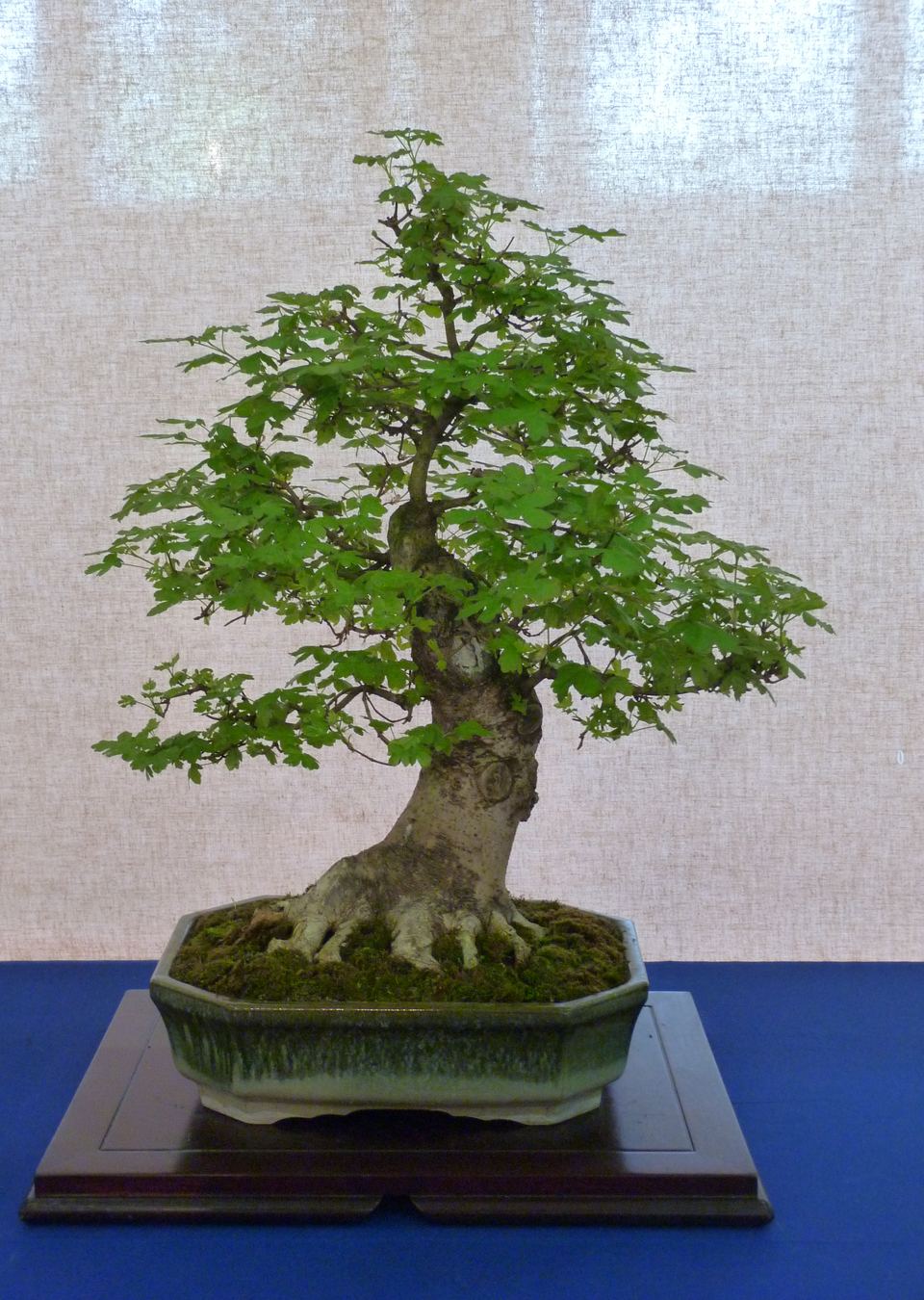

A year of care. RHS H6: a native tree, hardy in the ground; a shallow pot still wants shelter from a hard frost, because frozen roots cannot replace what a drying wind takes from the twigs. USDA 6b/7a, the RHS's own equivalent.
Timings for a temperate northern climate.
- Repot
- Wire
- Prune
- Pinch
- Protect
- Feed
- Water
- Watch for pests
- J
- F
- M
- A
- M
- J
- J
- A
- S
- O
- N
- D
Download as PDF Add to your calendar (.ics)
To print, use your browser's print command; the page is laid out for A4. Neither file carries product links.
- JanuaryDormant and content outside. Shelter the pot from the worst frost and from drying wind by putting it on the ground, against a wall or under a bench; a cold frame is a luxury this species does not need, though it does no harm. Check the soil is damp weekly. Bare-root hedging whips for a forest planting are sold now and can be heeled into a box of soil until March.protect, water
- FebruaryStructural work on a bare tree: the trunk chop on a collected stump, removal of a heavy branch, shortening a long leader. Seal the cuts. Collected hedgerow trees are lifted this month or next, with as much root as the hedge allows, and potted in a free- draining mix in a deep box. The buds move at the end of the month in a mild year.prune
- MarchRepot as the buds swell, every two years for a young tree and every three or four for an old one. Comb the roots out and remove up to a third. A forest of whips is assembled now: root-pruned hard, set in a shallow tray with the tallest tree a little forward of centre, tied in, and left to grow. Keep repotted trees out of wind and frost for three weeks.repot, protect
- AprilLeaves open. A late frost can blacken the new growth, and although a field maple recovers, fleece on a clear, still night saves the season. Pinch the opening shoots on a tree in refinement to the first pair of leaves; let a collected tree or a forest in its first year grow freely. Water daily when the surface dries.pinch, protect, water
- MayGrowth is fast and the pot dries daily; water every day and twice in a warm spell. Begin feeding when the leaves harden: a balanced feed weekly for a tree being developed, fortnightly at half strength for one in refinement. Keep pinching. Squash the aphids on the shoot tips before they curl the leaves.water, feed, pinch, pests
- JuneCut the spring extension back to one or two pairs of leaves on shoots you want to ramify; a strong, established tree can be partly or fully defoliated in early June for a smaller second set of leaves. A collected tree in its first year is left alone to build root. Wire young shoots now if you must, checking it every two weeks; the tree is more forgiving of wire than other maples but still thickens fast.prune, pinch, wire, water
- JulyWater is the job. Full sun is fine for this species and keeps the leaves small, but a pot in full sun dries by lunchtime, so water morning and evening. Feed lightly. Watch for powdery mildew in a hot, still spell and move the tree somewhere airier if it appears. Tidy long shoots.water, feed, pests
- AugustAs July, with any second flush pinched as it comes. Late in the month a nematode drench for vine weevil while the soil is warm. Check wire and remove any that is marking; a branch set in June will usually hold by now.water, feed, pests, wire
- SeptemberGrowth stops. Give two low-nitrogen feeds to harden the wood and then stop. Water less as the nights cool. A good month to look at a developing tree and decide which branches to keep for next year; mark them, but make the cuts in winter.feed, water
- OctoberYellow autumn colour in the second half of the month. Stop feeding. After leaf drop, wire young shoots if needed; the bark tolerates it over winter and the wire comes off in spring. Clear fallen leaves from the soil. Bare-root hedging whips go on sale in a few weeks if you are planning a forest.wire, prune
- NovemberDormant. Water only if the soil is drying, which in November it seldom is; make sure the pot drains, on feet and tilted a little if the rain is relentless. The pot can stay out in all but a hard, windy frost. Remove any wire that is biting.water, protect, wire
- DecemberLeave it cold, damp and sheltered. Check the soil after frosts for ice-heave and drainage. Light tidying of crossing twigs is fine on a bare tree; the big cuts wait for February. Hedge-laying season is a good time to ask a farmer or a hedge-layer for the stumps and trunks they are taking out, which is where the best field maple material comes from.protect, water, prune
What you'll need
Repot
- Akadama (hard, medium grade) Check price on Amazon Search eBay
- Pumice (3 to 6 mm) Check price on Amazon Search eBay
- Lava rock (kiryu or black lava, 3 to 6 mm) Check price on Amazon Search eBay
- Drainage mesh and tie-in wire Check price on Amazon Search eBay
- Root hook and rake Check price on Amazon Search eBay
- Bamboo chopsticks (plain) Check price on Amazon Search eBay
Wire
- Anodised aluminium wire, 1 to 4 mm Check price on Amazon Search eBay
- Bonsai wire cutter Check price on Amazon Search eBay
Prune
- Bonsai shears (long-handled, stainless) Check price on Amazon Search eBay
- Concave branch cutter Check price on Amazon Search eBay
- Cut paste (wound sealant) Check price on Amazon Search eBay
Feed
Protect
Basis of each row
Rules of thumb from the sources named here; your garden, windowsill and weather will differ. These are the rows as sourced, for a temperate climate.
| Month | What to do | Basis |
|---|---|---|
| January | Dormant and content outside. Shelter the pot from the worst frost and from drying wind by putting it on the ground, against a wall or under a bench; a cold frame is a luxury this species does not need, though it does no harm. Check the soil is damp weekly. Bare-root hedging whips for a forest planting are sold now and can be heeled into a box of soil until March. | rhs RHS: Acer campestre plant page (hardiness H6, native); RHS advice: overwintering container plants |
| February | Structural work on a bare tree: the trunk chop on a collected stump, removal of a heavy branch, shortening a long leader. Seal the cuts. Collected hedgerow trees are lifted this month or next, with as much root as the hedge allows, and potted in a free- draining mix in a deep box. The buds move at the end of the month in a mild year. | reference Harry Harrington, bonsai4me.com species guide (Acer campestre): late-winter pruning and collection; general practice on sealing |
| March | Repot as the buds swell, every two years for a young tree and every three or four for an old one. Comb the roots out and remove up to a third. A forest of whips is assembled now: root-pruned hard, set in a shallow tray with the tallest tree a little forward of centre, tied in, and left to grow. Keep repotted trees out of wind and frost for three weeks. | reference Peter Chan, Bonsai Masterclass (repotting deciduous trees at bud swell; group plantings); general practice |
| April | Leaves open. A late frost can blacken the new growth, and although a field maple recovers, fleece on a clear, still night saves the season. Pinch the opening shoots on a tree in refinement to the first pair of leaves; let a collected tree or a forest in its first year grow freely. Water daily when the surface dries. | practice General bonsai practice for maples in spring; RHS advice: protecting new growth from late frost |
| May | Growth is fast and the pot dries daily; water every day and twice in a warm spell. Begin feeding when the leaves harden: a balanced feed weekly for a tree being developed, fortnightly at half strength for one in refinement. Keep pinching. Squash the aphids on the shoot tips before they curl the leaves. | practice General bonsai practice: feed after the leaves harden; RHS advice on aphids |
| June | Cut the spring extension back to one or two pairs of leaves on shoots you want to ramify; a strong, established tree can be partly or fully defoliated in early June for a smaller second set of leaves. A collected tree in its first year is left alone to build root. Wire young shoots now if you must, checking it every two weeks; the tree is more forgiving of wire than other maples but still thickens fast. | reference Harry Harrington, bonsai4me.com (Acer campestre: cutting back and defoliation on strong trees); general practice |
| July | Water is the job. Full sun is fine for this species and keeps the leaves small, but a pot in full sun dries by lunchtime, so water morning and evening. Feed lightly. Watch for powdery mildew in a hot, still spell and move the tree somewhere airier if it appears. Tidy long shoots. | rhs RHS advice: powdery mildews (air movement, watering); general practice on summer watering of container trees |
| August | As July, with any second flush pinched as it comes. Late in the month a nematode drench for vine weevil while the soil is warm. Check wire and remove any that is marking; a branch set in June will usually hold by now. | rhs RHS advice: vine weevil (nematodes in late summer); general practice on wire checks |
| September | Growth stops. Give two low-nitrogen feeds to harden the wood and then stop. Water less as the nights cool. A good month to look at a developing tree and decide which branches to keep for next year; mark them, but make the cuts in winter. | practice General bonsai practice: low-nitrogen autumn feed for deciduous trees |
| October | Yellow autumn colour in the second half of the month. Stop feeding. After leaf drop, wire young shoots if needed; the bark tolerates it over winter and the wire comes off in spring. Clear fallen leaves from the soil. Bare-root hedging whips go on sale in a few weeks if you are planning a forest. | practice General bonsai practice: wiring deciduous trees after leaf drop; estimate on autumn colour timing from UK hedgerow observation |
| November | Dormant. Water only if the soil is drying, which in November it seldom is; make sure the pot drains, on feet and tilted a little if the rain is relentless. The pot can stay out in all but a hard, windy frost. Remove any wire that is biting. | rhs RHS advice: overwintering container plants (drainage and raising pots) |
| December | Leave it cold, damp and sheltered. Check the soil after frosts for ice-heave and drainage. Light tidying of crossing twigs is fine on a bare tree; the big cuts wait for February. Hedge-laying season is a good time to ask a farmer or a hedge-layer for the stumps and trunks they are taking out, which is where the best field maple material comes from. | practice General bonsai practice for dormant native deciduous trees; collection practice as described by UK growers (estimate on availability) |
Soil for this species: 2 parts akadama, 1 part pumice, 1 part lava (by volume); it also does well in a cheaper mix of 1 part akadama to 1 part horticultural grit for a tree in training. Tools and materials: starter kits.