Trident maple
Acer buergerianum
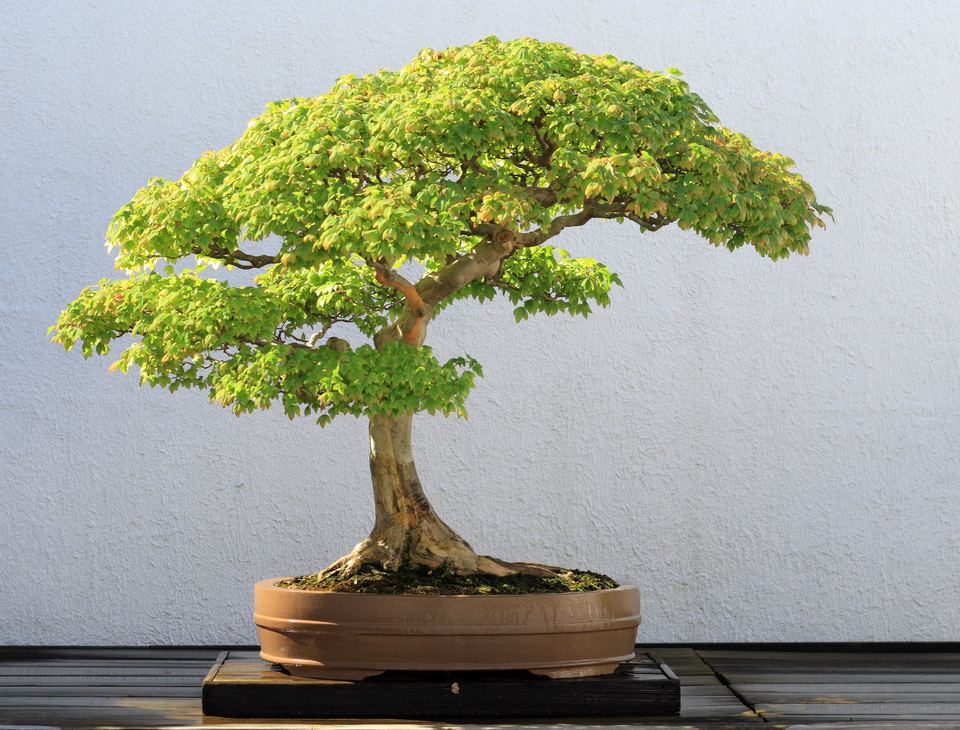

A year of care. RHS H6: hardy in the ground; the fleshy roots in a pot are more frost-tender than the top, so protect the pot in a hard frost and never let it freeze solid for days. USDA 6b/7a, the RHS's own equivalent.
Timings for a temperate northern climate.
- Repot
- Wire
- Prune
- Pinch
- Protect
- Feed
- Water
- Watch for pests
- J
- F
- M
- A
- M
- J
- J
- A
- S
- O
- N
- D
Download as PDF Add to your calendar (.ics)
To print, use your browser's print command; the page is laid out for A4. Neither file carries product links.
- JanuaryDormant outside, with the pot on the ground in a sheltered corner or in a cold frame for spells of hard frost. The fleshy roots are the weak point: do not let the pot stand frozen solid for days, and do not let it sit in water either. Check the soil every week or so and water only if it is drying. Study the bare structure and decide which branches go.protect, water
- FebruaryThe month for big cuts: a trunk chop or the removal of a heavy branch, sealed, while the tree is dormant and will callus from spring. Fleshy roots can be reduced hard at repotting, but that waits for bud swell. In a mild year the buds move in the last week, and from then on the tree should stay in one place rather than going in and out of shelter.prune, protect
- MarchRepot as the buds swell, every year or two for a young tree and every two or three for an old one, because the roots fill the pot faster than any other maple. A healthy trident takes a hard root pruning, half or more, and recovers. Set it in fresh mix at the same depth, water well, and keep it out of frost and wind for three or four weeks. No feed until the leaves harden.repot, protect
- AprilLeaves open and growth starts fast. Protect new leaves from late frost with fleece on clear, still nights. On a tree in refinement, pinch each new shoot back to the first pair of leaves as it opens, strong shoots first; on a tree being thickened, let everything run. Water daily as soon as the surface dries. Full sun from now on.pinch, protect, water
- MayGrowth is at its fastest and water is the job: a trident in a shallow pot can need watering twice a day in a warm spell. Begin feeding when the leaves have hardened, with a balanced feed every week or fortnight for a tree in development and half that for one in refinement. Keep pinching. Check any wire from the winter every few days; it bites fast now and usually comes off this month.water, feed, pinch, wire
- JuneCut back the spring extension to one or two pairs of leaves on every shoot you want to ramify, and remove any shoot growing straight up or down from a branch. A strong, established tree can be fully defoliated in early June for a second, smaller set of leaves and finer twigging; not a weak tree, and not one repotted this spring. Water and feed as in May.prune, pinch, water, feed
- JulyWater, every day and more in heat; a trident wilts fast and recovers, but the shoot tips it loses are next year's twigs. Keep pinching the regrowth on a refined tree. Feed lightly. Sacrifice branches on a tree in development are left to run; everything else is kept tidy. Do not wire in summer.water, feed, pinch
- AugustAs July, with the second flush pinched as it comes. Late in the month, drench the pot with vine weevil nematodes while the soil is warm. Long shoots that have escaped can be cut back now without harm; the tree will still have time to harden the regrowth.water, feed, pests, prune
- SeptemberGrowth slows and stops. Two low-nitrogen feeds (a tomato feed at half strength) harden the wood for winter; then stop. Water less as the days shorten and the nights cool. This is a good month to check the nebari and remove any root that has heaved above the soil, sealing the cut.feed, water, prune
- OctoberAutumn colour in the second half of the month in a good year; stop feeding altogether. Once the leaves drop, the twigging is visible and light wiring of young shoots can be done, to be checked monthly and removed by April. Clear the fallen leaves from the pot. A tree in development can have its sacrifice branches cut back now or in February.wire, prune
- NovemberDormant. Water only when the soil is drying; in a wet month the risk is the opposite, so raise the pot on feet and tilt it a little so it drains. Start the frost routine: sheltered outside, cold frame or unheated shed for the hard nights, out again after. Remove any wire that is starting to bite.water, protect, wire
- DecemberKeep it cold, damp and sheltered, and keep the fleshy roots from freezing solid for days at a time. Check after each frost that the soil has drained. Light tidying of crossing twigs can be done on a bare tree at any time; the big cuts wait for February. Order akadama and a bigger training pot if the tree is being thickened; it will need both in March.protect, water, prune
What you'll need
Repot
- Akadama (hard, medium grade) Check price on Amazon Search eBay
- Pumice (3 to 6 mm) Check price on Amazon Search eBay
- Lava rock (kiryu or black lava, 3 to 6 mm) Check price on Amazon Search eBay
- Drainage mesh and tie-in wire Check price on Amazon Search eBay
- Root hook and rake Check price on Amazon Search eBay
- Bamboo chopsticks (plain) Check price on Amazon Search eBay
Wire
- Anodised aluminium wire, 1 to 4 mm Check price on Amazon Search eBay
- Bonsai wire cutter Check price on Amazon Search eBay
Prune
- Bonsai shears (long-handled, stainless) Check price on Amazon Search eBay
- Concave branch cutter Check price on Amazon Search eBay
- Cut paste (wound sealant) Check price on Amazon Search eBay
Feed
Protect
Basis of each row
Rules of thumb from the sources named here; your garden, windowsill and weather will differ. These are the rows as sourced, for a temperate climate.
| Month | What to do | Basis |
|---|---|---|
| January | Dormant outside, with the pot on the ground in a sheltered corner or in a cold frame for spells of hard frost. The fleshy roots are the weak point: do not let the pot stand frozen solid for days, and do not let it sit in water either. Check the soil every week or so and water only if it is drying. Study the bare structure and decide which branches go. | rhs RHS: Acer buergerianum plant page (hardiness H6, sheltered position); RHS advice: overwintering container plants |
| February | The month for big cuts: a trunk chop or the removal of a heavy branch, sealed, while the tree is dormant and will callus from spring. Fleshy roots can be reduced hard at repotting, but that waits for bud swell. In a mild year the buds move in the last week, and from then on the tree should stay in one place rather than going in and out of shelter. | reference Harry Harrington, bonsai4me.com species guide (Acer buergerianum): hard pruning in late winter; general practice on sealing |
| March | Repot as the buds swell, every year or two for a young tree and every two or three for an old one, because the roots fill the pot faster than any other maple. A healthy trident takes a hard root pruning, half or more, and recovers. Set it in fresh mix at the same depth, water well, and keep it out of frost and wind for three or four weeks. No feed until the leaves harden. | reference Peter Chan, Bonsai Masterclass (trident maples repotted at bud swell, hard root reduction tolerated); general practice |
| April | Leaves open and growth starts fast. Protect new leaves from late frost with fleece on clear, still nights. On a tree in refinement, pinch each new shoot back to the first pair of leaves as it opens, strong shoots first; on a tree being thickened, let everything run. Water daily as soon as the surface dries. Full sun from now on. | reference Harry Harrington, bonsai4me.com (trident maple: pinching in refinement, free growth in development) |
| May | Growth is at its fastest and water is the job: a trident in a shallow pot can need watering twice a day in a warm spell. Begin feeding when the leaves have hardened, with a balanced feed every week or fortnight for a tree in development and half that for one in refinement. Keep pinching. Check any wire from the winter every few days; it bites fast now and usually comes off this month. | practice General bonsai practice: feed after leaves harden; wire checked often on fast-thickening maples |
| June | Cut back the spring extension to one or two pairs of leaves on every shoot you want to ramify, and remove any shoot growing straight up or down from a branch. A strong, established tree can be fully defoliated in early June for a second, smaller set of leaves and finer twigging; not a weak tree, and not one repotted this spring. Water and feed as in May. | reference Peter Chan, Bonsai Masterclass; Harry Harrington, bonsai4me.com: June defoliation of strong trident maples |
| July | Water, every day and more in heat; a trident wilts fast and recovers, but the shoot tips it loses are next year's twigs. Keep pinching the regrowth on a refined tree. Feed lightly. Sacrifice branches on a tree in development are left to run; everything else is kept tidy. Do not wire in summer. | practice General bonsai practice for vigorous deciduous trees in summer |
| August | As July, with the second flush pinched as it comes. Late in the month, drench the pot with vine weevil nematodes while the soil is warm. Long shoots that have escaped can be cut back now without harm; the tree will still have time to harden the regrowth. | rhs RHS advice: vine weevil (nematodes applied in late summer); general practice on late-summer tidying |
| September | Growth slows and stops. Two low-nitrogen feeds (a tomato feed at half strength) harden the wood for winter; then stop. Water less as the days shorten and the nights cool. This is a good month to check the nebari and remove any root that has heaved above the soil, sealing the cut. | practice General bonsai practice: low-nitrogen autumn feed; surface-root tidying in early autumn |
| October | Autumn colour in the second half of the month in a good year; stop feeding altogether. Once the leaves drop, the twigging is visible and light wiring of young shoots can be done, to be checked monthly and removed by April. Clear the fallen leaves from the pot. A tree in development can have its sacrifice branches cut back now or in February. | reference Harry Harrington, bonsai4me.com (trident maple: wiring after leaf drop); general practice on hygiene |
| November | Dormant. Water only when the soil is drying; in a wet month the risk is the opposite, so raise the pot on feet and tilt it a little so it drains. Start the frost routine: sheltered outside, cold frame or unheated shed for the hard nights, out again after. Remove any wire that is starting to bite. | rhs RHS advice: overwintering container plants (drainage, raising pots, shelter in hard frost) |
| December | Keep it cold, damp and sheltered, and keep the fleshy roots from freezing solid for days at a time. Check after each frost that the soil has drained. Light tidying of crossing twigs can be done on a bare tree at any time; the big cuts wait for February. Order akadama and a bigger training pot if the tree is being thickened; it will need both in March. | practice General bonsai practice for dormant deciduous trees; estimate on root frost sensitivity of fleshy-rooted maples, widely reported by growers |
Soil for this species: 2 parts akadama, 1 part pumice, 1 part lava (by volume); for a tree being thickened in a large training pot, a coarser mix with more lava. Tools and materials: starter kits.