Chinese elm
Ulmus parvifolia
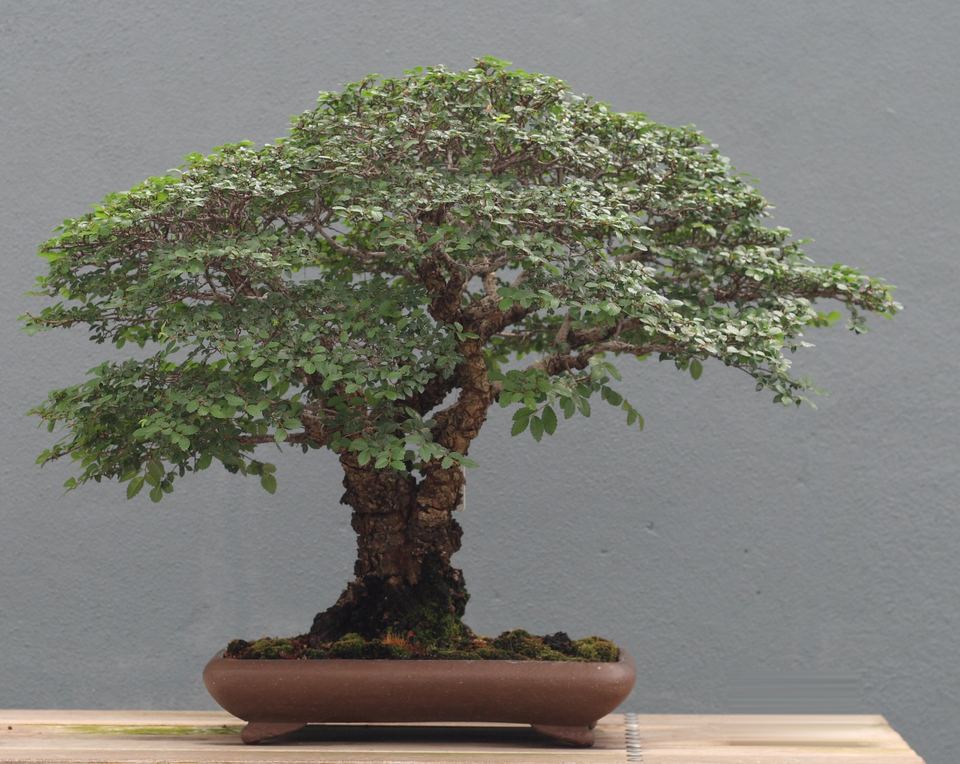

A year of care. RHS H7 in the ground (https://www.rhs.org.uk/plants/21508/ulmus-parvifolia/details, checked 30 Oct 2026: hardy in the severest European climates, deciduous to semi-evergreen). The roots in a shallow bonsai pot are far less hardy than the tree, so a potted Chinese elm is treated as about H4: sheltered, and under cover below about -5 °C. Indoors it is semi-evergreen and keeps most of its leaves. USDA 6a-1, the RHS's own equivalent.
Timings for a temperate northern climate.
- Repot
- Wire
- Prune
- Pinch
- Protect
- Feed
- Water
- Watch for pests
- J
- F
- M
- A
- M
- J
- J
- A
- S
- O
- N
- D
Download as PDF Add to your calendar (.ics)
To print, use your browser's print command; the page is laid out for A4. Neither file carries product links.
- JanuaryOutdoors: the tree is bare and dormant; keep the pot from freezing solid by moving it under cover below about -5 °C, and check it is not bone dry on a sunny day. Indoors: a cool, bright sill, water only when the surface is dry.protect, water
- FebruaryBuds begin to swell late in the month. Prepare the repotting kit. Indoors, the tree may drop and replace old leaves now; that is normal if the new buds are green. Wipe scale off the twigs while they are bare.pests, water, protect
- MarchRepot as the buds swell and before they open, every two years young and three or four later: roots back by about a third, into a free-draining mix, water well, keep out of frost for a fortnight. Structural pruning of larger branches is done now, before the sap rises fully.repot, prune
- AprilThe spring flush. Start feeding fortnightly once the first leaves have hardened. Let shoots extend to six or eight leaves, then cut back to two or three. An indoor tree moves outside at the end of the month in a mild year, after the last frost in your area.feed, prune, water
- MayKeep pruning shoots back as they extend, which is what builds the fine twigging. Wire young shoots while green; check it monthly, the bark marks fast. Water daily in a warm spell outdoors. Watch for aphids on the soft growth.prune, wire, water, feed, pests
- JuneAs May. A strong, healthy tree can be partly defoliated now to reduce leaf size and let light into the crown; leave the weak and the recently repotted alone. Feed fortnightly.pinch, prune, feed, water
- JulyPeak growth. Prune extended shoots back to two or three leaves, pinch the leader so it does not thicken out of proportion. Never let the pot dry out in a heatwave: morning and evening checks. Elm leaf beetle larvae, if any, are picked off.prune, pinch, water, feed, pests
- AugustLast pruning of the year by the end of the month so new growth can harden before autumn. Remove wire that is starting to bite. Keep feeding, moving to a lower-nitrogen feed late in the month.prune, wire, feed, water
- SeptemberAn indoor tree comes back to its cool sill before the first cool nights, usually early to mid September. Outdoor trees stay out. Feed with a low-nitrogen feed to harden the wood. No more pruning or wiring.protect, feed, water
- OctoberOutdoors the leaves begin to turn and drop late in the month; clear fallen leaves from the pot surface to stop fungus overwintering. Stop feeding. Reduce watering as the tree slows. Indoors, water less as the light drops.water, pests
- NovemberOutdoor trees drop their last leaves and show their winter silhouette; this is the month to study the branch structure and plan winter pruning. Move the tree to a sheltered spot out of the wind. Indoors, a cool bright sill and sparing water.protect, water
- DecemberFully dormant outdoors. Protect from hard frost under cover; a cold frame or unheated shed is ideal, a heated room is not. Check for dryness on dry windy days. Indoors, as November; do nothing but water correctly.protect, water
What you'll need
Repot
- Akadama (hard, medium grade) Check price on Amazon Search eBay
- Pumice (3 to 6 mm) Check price on Amazon Search eBay
- Lava rock (kiryu or black lava, 3 to 6 mm) Check price on Amazon Search eBay
- Drainage mesh and tie-in wire Check price on Amazon Search eBay
- Root hook and rake Check price on Amazon Search eBay
- Bamboo chopsticks (plain) Check price on Amazon Search eBay
Wire
- Anodised aluminium wire, 1 to 4 mm Check price on Amazon Search eBay
- Bonsai wire cutter Check price on Amazon Search eBay
Prune
- Bonsai shears (long-handled, stainless) Check price on Amazon Search eBay
- Concave branch cutter Check price on Amazon Search eBay
- Cut paste (wound sealant) Check price on Amazon Search eBay
Feed
Protect
Basis of each row
Rules of thumb from the sources named here; your garden, windowsill and weather will differ. These are the rows as sourced, for a temperate climate.
| Month | What to do | Basis |
|---|---|---|
| January | Outdoors: the tree is bare and dormant; keep the pot from freezing solid by moving it under cover below about -5 °C, and check it is not bone dry on a sunny day. Indoors: a cool, bright sill, water only when the surface is dry. | rhs RHS: Ulmus parvifolia, https://www.rhs.org.uk/plants/21508/ulmus-parvifolia/details (H7 in the ground); RHS advice: overwintering container plants (pot roots are less hardy than the tree) |
| February | Buds begin to swell late in the month. Prepare the repotting kit. Indoors, the tree may drop and replace old leaves now; that is normal if the new buds are green. Wipe scale off the twigs while they are bare. | practice general bonsai practice for deciduous trees in late winter |
| March | Repot as the buds swell and before they open, every two years young and three or four later: roots back by about a third, into a free-draining mix, water well, keep out of frost for a fortnight. Structural pruning of larger branches is done now, before the sap rises fully. | reference Harry Harrington, bonsai4me.com species guide: Ulmus parvifolia; Peter Chan, Bonsai Masterclass (repotting deciduous trees at bud swell) |
| April | The spring flush. Start feeding fortnightly once the first leaves have hardened. Let shoots extend to six or eight leaves, then cut back to two or three. An indoor tree moves outside at the end of the month in a mild year, after the last frost in your area. | practice general bonsai practice (clip-and-grow on elms); last-frost timing from RHS advice: frost protection |
| May | Keep pruning shoots back as they extend, which is what builds the fine twigging. Wire young shoots while green; check it monthly, the bark marks fast. Water daily in a warm spell outdoors. Watch for aphids on the soft growth. | reference Bonsai Empire species guide: Chinese elm; RHS advice: aphids |
| June | As May. A strong, healthy tree can be partly defoliated now to reduce leaf size and let light into the crown; leave the weak and the recently repotted alone. Feed fortnightly. | reference Harry Harrington, bonsai4me.com: defoliation (healthy deciduous trees in early summer); Peter Warren, Bonsai (DK) |
| July | Peak growth. Prune extended shoots back to two or three leaves, pinch the leader so it does not thicken out of proportion. Never let the pot dry out in a heatwave: morning and evening checks. Elm leaf beetle larvae, if any, are picked off. | practice general bonsai practice for summer maintenance of deciduous trees |
| August | Last pruning of the year by the end of the month so new growth can harden before autumn. Remove wire that is starting to bite. Keep feeding, moving to a lower-nitrogen feed late in the month. | practice general bonsai practice; the switch to a low-nitrogen autumn feed is common UK practice, not a measured rule |
| September | An indoor tree comes back to its cool sill before the first cool nights, usually early to mid September. Outdoor trees stay out. Feed with a low-nitrogen feed to harden the wood. No more pruning or wiring. | estimate the move-in date is our judgement from average first cool nights for England; autumn feeding from general practice |
| October | Outdoors the leaves begin to turn and drop late in the month; clear fallen leaves from the pot surface to stop fungus overwintering. Stop feeding. Reduce watering as the tree slows. Indoors, water less as the light drops. | practice general bonsai practice; leaf hygiene from RHS advice: leaf spot |
| November | Outdoor trees drop their last leaves and show their winter silhouette; this is the month to study the branch structure and plan winter pruning. Move the tree to a sheltered spot out of the wind. Indoors, a cool bright sill and sparing water. | practice general bonsai practice for deciduous trees entering dormancy |
| December | Fully dormant outdoors. Protect from hard frost under cover; a cold frame or unheated shed is ideal, a heated room is not. Check for dryness on dry windy days. Indoors, as November; do nothing but water correctly. | rhs RHS advice: overwintering container plants (frost protection for pot-grown roots); RHS: Ulmus parvifolia (H7 (in the ground; about H4 in a pot)) |
Soil for this species: 2 parts akadama, 1 part pumice, 1 part lava (by volume); a touch more akadama for a tree kept indoors and watered often. Tools and materials: starter kits.