Carmona (Fukien tea)
Carmona microphylla (syn. Ehretia microphylla)
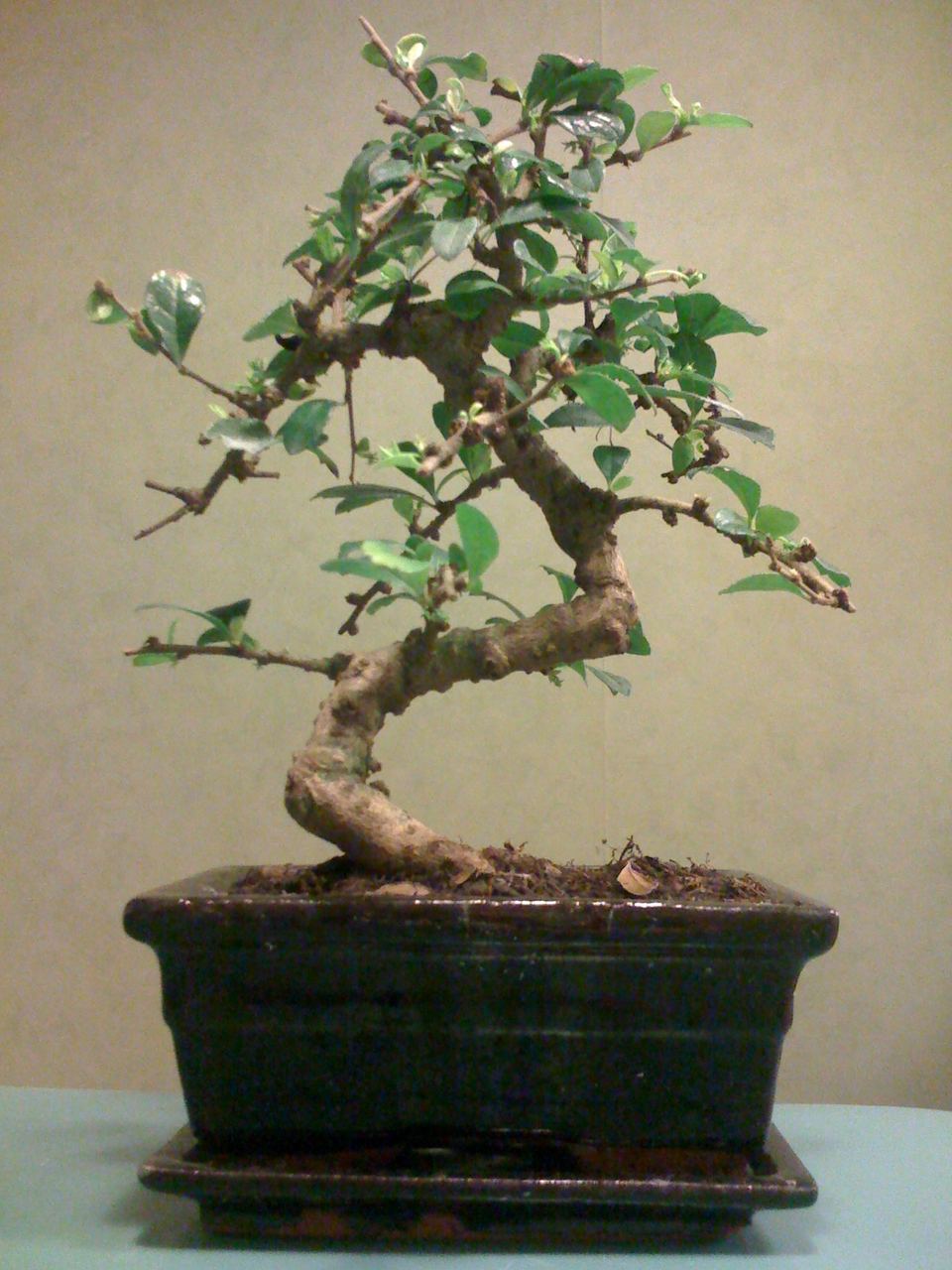

A year of care. RHS H1c (https://www.rhs.org.uk/plants/207663/carmona/details, checked 30 Oct 2026): can be grown outside in summer, minimum 5 to 10 °C. In practice a Carmona in a bonsai pot sulks and drops leaves below about 12 °C, so we treat it as warmer than its rating: a warm, bright, humid spot all year and outside only in high summer. USDA 11, the RHS's own equivalent.
Timings for a temperate northern climate.
- Repot
- Wire
- Prune
- Pinch
- Protect
- Feed
- Water
- Watch for pests
- J
- F
- M
- A
- M
- J
- J
- A
- S
- O
- N
- D
Download as PDF Add to your calendar (.ics)
To print, use your browser's print command; the page is laid out for A4. Neither file carries product links.
- JanuaryThe brightest, warmest sill, away from the radiator's direct heat and from doors. Water only when the surface of the mix is dry, with water at room temperature, and let the pot drain fully. A grow light for 10 to 12 hours a day makes a real difference now. No feeding, no pruning.water, protect
- FebruaryAs January. Check stems and leaf undersides for scale and mealybug, which build up in a warm dry house; wipe them off. Keep humidity up with a gravel tray; a bright bathroom is a good winter home.water, pests, protect
- MarchAs the light returns, new growth starts. Begin feeding at half strength once new leaves show, fortnightly. Water a little more often as growth begins. Turn the pot weekly for even growth.feed, water
- AprilPinch new shoots back to two or three leaves once they have four or five; this is what builds the fine crown. Light wiring of young shoots only, checked every few weeks. First flowers may appear on new growth.pinch, wire, feed, water
- MayRepot now if it is due (every two years young, three or four later), when the room is warm and the days long: roots back by no more than a quarter, into a fast-draining mix, water well and keep out of direct sun for two weeks. Any hard pruning is done now, while the tree is growing.repot, prune, feed
- JuneKeep pinching shoots as they extend. Feed fortnightly at half strength. Water as the surface dries, which may now be daily in a warm bright room. Remove berries on a young tree so it spends its energy on growth.pinch, feed, water
- JulyThe tree can go outside now, in a sheltered, partly shaded spot, once nights are reliably above about 12 to 15 °C; many growers keep it in all year instead. Water daily outside in warm weather. Keep pinching and feeding.pinch, feed, water, protect
- AugustAs July. Watch for red spider mite in hot, dry weather, and whitefly on a tree that has been outside; rinse the foliage and treat if needed. Bring the tree back in at the end of the month if nights are cooling early.pests, water, feed, pinch
- SeptemberBack indoors by early September at the latest, before the first cool nights, to its bright sill; expect a few leaves to drop as it settles. Last pinching of the year early in the month. Reduce feeding to monthly.protect, pinch, feed
- OctoberWater less as the light drops; let the surface dry between waterings. Stop feeding by the end of the month. Keep away from draughts and from radiators coming back on; a gravel tray under the pot for humidity.water, protect
- NovemberShort days and dry heated air: the dangerous months begin. Water sparingly with room-temperature water, only when the surface is dry, and never let the pot stand in water. A grow light on a timer is the single most useful thing you can give it.water, protect
- DecemberAs November. Do nothing beyond correct watering, light and humidity. Wipe dust from the leaves. Do not repot, prune or feed, however the tree looks; wait for spring.water, protect
What you'll need
Repot
- Akadama (hard, medium grade) Check price on Amazon Search eBay
- Pumice (3 to 6 mm) Check price on Amazon Search eBay
- Lava rock (kiryu or black lava, 3 to 6 mm) Check price on Amazon Search eBay
- Drainage mesh and tie-in wire Check price on Amazon Search eBay
- Root hook and rake Check price on Amazon Search eBay
- Bamboo chopsticks (plain) Check price on Amazon Search eBay
Wire
- Anodised aluminium wire, 1 to 4 mm Check price on Amazon Search eBay
- Bonsai wire cutter Check price on Amazon Search eBay
Prune
- Bonsai shears (long-handled, stainless) Check price on Amazon Search eBay
- Concave branch cutter Check price on Amazon Search eBay
- Cut paste (wound sealant) Check price on Amazon Search eBay
Feed
Basis of each row
Rules of thumb from the sources named here; your garden, windowsill and weather will differ. These are the rows as sourced, for a temperate climate.
| Month | What to do | Basis |
|---|---|---|
| January | The brightest, warmest sill, away from the radiator's direct heat and from doors. Water only when the surface of the mix is dry, with water at room temperature, and let the pot drain fully. A grow light for 10 to 12 hours a day makes a real difference now. No feeding, no pruning. | rhs RHS advice: houseplant care in winter (light, watering, minimum temperatures); RHS: Carmona, https://www.rhs.org.uk/plants/207663/carmona/details (H1c, evergreen, bright and sheltered indoors) |
| February | As January. Check stems and leaf undersides for scale and mealybug, which build up in a warm dry house; wipe them off. Keep humidity up with a gravel tray; a bright bathroom is a good winter home. | rhs RHS advice: scale insects, mealybugs; general bonsai practice for indoor trees in winter |
| March | As the light returns, new growth starts. Begin feeding at half strength once new leaves show, fortnightly. Water a little more often as growth begins. Turn the pot weekly for even growth. | practice general bonsai practice; feeding follows new growth, not the calendar |
| April | Pinch new shoots back to two or three leaves once they have four or five; this is what builds the fine crown. Light wiring of young shoots only, checked every few weeks. First flowers may appear on new growth. | reference Bonsai Empire species guide: Fukien tea (Carmona); Harry Harrington, bonsai4me.com species guide: Carmona |
| May | Repot now if it is due (every two years young, three or four later), when the room is warm and the days long: roots back by no more than a quarter, into a fast-draining mix, water well and keep out of direct sun for two weeks. Any hard pruning is done now, while the tree is growing. | reference Peter Chan, Bonsai Masterclass (repotting tender indoor trees in late spring); Bonsai Empire species guide: Fukien tea |
| June | Keep pinching shoots as they extend. Feed fortnightly at half strength. Water as the surface dries, which may now be daily in a warm bright room. Remove berries on a young tree so it spends its energy on growth. | practice general bonsai practice for pinch-and-grow on small-leaved evergreens |
| July | The tree can go outside now, in a sheltered, partly shaded spot, once nights are reliably above about 12 to 15 °C; many growers keep it in all year instead. Water daily outside in warm weather. Keep pinching and feeding. | estimate the 12 to 15 °C night threshold is our rule of thumb from the RHS H1c rating (minimum 5 to 10 °C, https://www.rhs.org.uk/plants/207663/carmona/details) kept on the warm side because a potted Carmona drops leaves in the cold and general practice; keeping it indoors all year is equally common advice |
| August | As July. Watch for red spider mite in hot, dry weather, and whitefly on a tree that has been outside; rinse the foliage and treat if needed. Bring the tree back in at the end of the month if nights are cooling early. | rhs RHS advice: glasshouse red spider mite, glasshouse whitefly; general bonsai practice |
| September | Back indoors by early September at the latest, before the first cool nights, to its bright sill; expect a few leaves to drop as it settles. Last pinching of the year early in the month. Reduce feeding to monthly. | estimate our judgement from average first cool nights in England and the tree's tender rating; a Carmona is moved in earlier than a ficus |
| October | Water less as the light drops; let the surface dry between waterings. Stop feeding by the end of the month. Keep away from draughts and from radiators coming back on; a gravel tray under the pot for humidity. | practice general bonsai practice for tender indoor trees as daylight falls; RHS advice: houseplant care in winter |
| November | Short days and dry heated air: the dangerous months begin. Water sparingly with room-temperature water, only when the surface is dry, and never let the pot stand in water. A grow light on a timer is the single most useful thing you can give it. | practice general bonsai practice; overwatering in winter is the commonest cause of loss reported in the bonsai references named above |
| December | As November. Do nothing beyond correct watering, light and humidity. Wipe dust from the leaves. Do not repot, prune or feed, however the tree looks; wait for spring. | practice general bonsai practice for tender evergreens in a British winter |
Soil for this species: 2 parts akadama, 1 part pumice, 1 part lava (by volume), with a little composted bark if the room is very dry. Tools and materials: starter kits.